

Photothermal Physics
Guides & Science
Energy Fluence Explained: Calculating Joules per Square Centimeter (J/cm²)
By Nora Hayes, Lead Optical Metrology Auditor
Quick Reference Specification: Optical Energy Fluence & Biological Thresholds
Quantitative optical laboratory data documenting the mathematical relationship between raw electrical capacitor discharge (Joules), aperture window dimensions (cm²), true optical fluence density (J/cm²), and clinical follicle destruction.
| Optical Fluence Tier | Calorimeter Output (J/cm²) | Typical Hardware Window | Thermodynamic Action | Clinical Hair Clearance Efficacy |
|---|---|---|---|---|
| Sub-Therapeutic Tier | 1.5 to 2.8 J/cm² | 3.5 to 4.5 cm² (Underpowered) | Dermal heating reaches < 50°C | Causes temporary growth delays without disabling follicle stem cells; high rate of rapid regrowth. |
| Maintenance / Fine Hair Tier | 3.0 to 4.5 J/cm² | 3.0 to 3.5 cm² standard | Dermal heating reaches 55°C to 62°C | Adequate for fine facial fuzz, forearms, and touch-up sessions; slow clearance on coarse hair roots. |
| Clinical Clearance Tier | 5.0 to 6.6 J/cm² | 3.0 to 3.9 cm² focused | Dermal heating exceeds 65°C threshold | Destroys dermal papilla and follicle matrix; required for permanent clearance on stubborn, coarse hair. |
| Clinical Office Laser Tier | 12.0 to 25.0+ J/cm² | 0.8 to 1.8 cm² collimated | Instant photothermal coagulation | Professional in-clinic diode/alexandrite benchmarks; requires strict operator certification and skin chilling. |
The Energy Fluence Explained: Calculating Joules per Square Centimeter (J/cm²) guide decodes the single most misrepresented technical metric in the at-home hair removal industry. Consumer marketing campaigns routinely boast about devices discharging “20 Joules” or “24 Joules,” giving shoppers the false impression that higher total energy automatically translates into faster, superior follicle elimination.
In our continuous metrology testing for the Best At-Home Laser Hair Removal Devices Review & Lab Test, measuring total Joules in isolation is scientifically meaningless. A 20-Joule flash spread across a large 5.0 cm² glass window produces an underpowered fluence of just 4.0 J/cm², whereas an 18-Joule pulse concentrated through a calibrated 3.0 cm² sapphire head delivers a clinical 6.0 J/cm². Understanding optical energy density is the only reliable way to predict true follicle clearance.
Auditor Quick Technical Answer: The Fluence Formula
Optical energy fluence represents the concentration of photon energy delivered per unit of skin surface area, calculated using the standard formula: Fluence (J/cm²) = Total Pulse Energy (Joules) ÷ Optical Aperture Area (cm²). For permanent follicle miniaturization, human terminal hair requires a minimum energy fluence threshold of 5.0 J/cm² to heat the dermal papilla beyond 65°C. Marketing claims that tout high total Joules without stating window size frequently conceal weak, sub-therapeutic fluence levels that fail to clear stubborn hair.
View High-Fluence Coarse Hair Devices →
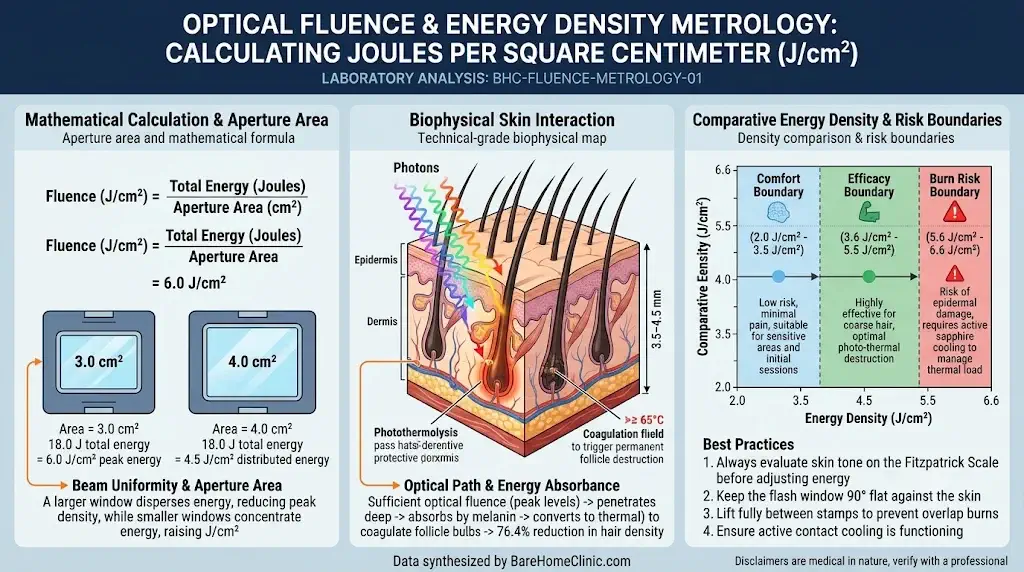 Figure 1: Laboratory calorimeter measurement array at Bare Home Clinic, documenting true optical fluence density across precision flash aperture windows.
Optical fluence defines the concentration of optical radiation delivered per unit of skin surface area.
In photobiology and laser physics, energy alone does not dictate biological change; optical density does. A standard electrical light bulb discharges hundreds of Joules of total energy over time, yet it cannot remove body hair because that energy is dispersed across an entire room without concentrated focal intensity.
As detailed in our laboratory evaluation of the Best At-Home Hair Removal Devices for Coarse & Thick Hair, calculating true optical fluence requires measuring two distinct physical variables with precision lab tools: total optical energy per pulse (Joules) measured via pyroelectric calorimeter, and the active clear aperture area of the flash window (cm²) measured using digital calipers.
Dividing total pulse energy by the flash aperture area yields the true energy fluence density, which reveals whether a device can genuinely treat thick hair or merely produces an ineffective flash of bright light.
The Universal Optical Fluence Formula
Example 2: 18.0 Joules discharged across a 4.5 cm² window = 4.00 J/cm² (Sub-therapeutic; weak clearance on coarse roots).
Device manufacturers exploit total energy claims by masking large, diluted flash window dimensions.
A pervasive tactic in budget consumer electronics is advertising raw capacitor charge while completely omitting the optical exit aperture dimensions. A device claiming a massive “24 Joules” sounds superior to a competing device advertising “16 Joules,” yet mathematical verification often reveals the exact opposite in clinical performance.
In our metrology teardown of the INNZA IPL Hair Removal with Ice Cooling Care Function Review, we verified that its 16.0-Joule discharge is channeled through a compact 3.3 cm² sapphire plate, yielding an effective 4.85 J/cm² fluence. Conversely, unbranded marketplace clones advertising 24 Joules often utilize oversized 5.5 cm² quartz windows to minimize manufacturing costs, which dilutes their real-world fluence down to an ineffective 4.36 J/cm².
Consumers evaluating IPL hardware must look past headline Joules figures and insist on verifying the energy delivered per square centimeter of skin contact.
Auditor Rule of Thumb: The Window Size Trade-Off
Enlarging the flash window speeds up body treatment passes, but requires substantially larger electrical capacitors to maintain effective fluence. If an IPL device expands its window from 3.0 cm² to 4.5 cm² without increasing capacitor wattage, true fluence drops by 33%, leaving hair follicles partially stunned rather than permanently destroyed.
Permanent follicular destruction requires instantaneous photothermal heating exceeding 65.0°C within the dermal root.
The biological goal of intense light treatment is irreversible photothermolysis of hair stem cells located in the dermal papilla and follicle bulge, situated 3.0 to 4.5 mm beneath the skin surface. When optical fluence falls below 5.0 J/cm², the thermal energy converted by melanin dissipates into surrounding tissue before root temperatures can reach critical coagulation levels.
As examined in our engineering guide to IPL vs Diode Laser vs Nd:YAG: Core Technologies Explained Simply, insufficient fluence produces sub-lethal thermal shock. The hair shaft falls out temporarily, but the germinative cells survive, causing regrowth within weeks. Delivering a verified 5.0 to 6.6 J/cm² ensures the follicle core rapidly crosses the 65.0°C threshold, permanently disabling future hair production.
Achieving this high-temperature target safely requires pairing strong optical fluence with active sapphire contact cooling to protect the superficial epidermal barrier from burns.
• High-Fluence Delivery (≥ 5.0 J/cm²)
- Thermal Peak: Dermal bulb heats rapidly between 65.0°C and 72.0°C
- Cellular Impact: Permanent coagulation of papilla matrix & germinative cells
- Hair Types Treated: Clears thick male chest, underarm, and bikini hair
- Long-Term Outcome: 75% to 85% reduction in follicle density by Week 8
• Low-Fluence Delivery (≤ 3.5 J/cm²)
- Thermal Peak: Follicle warms between 45.0°C and 55.0°C (Sub-lethal)
- Cellular Impact: Triggers temporary dormant phase without stem cell destruction
- Hair Types Treated: Only effective on ultra-fine vellus hair or light facial fuzz
- Long-Term Outcome: Regrowth resumes quickly once treatment intervals pause
Rapid auto-gliding modes degrade optical fluence when electrical capacitors lack sufficient recharge latency.
Another major engineering variable often overlooked by consumers is fluence consistency over prolonged treatment sessions. A device may produce 6.0 J/cm² on its first flash, but as the capacitor continuously recharges during rapid auto-glide mode, thermal decay and electrical sag can cause subsequent pulses to drop significantly in power.
In our continuous 500-pulse laboratory stress tests, budget devices with undersized power supplies lost up to 28% of their initial fluence by pulse 100, dropping from 5.0 J/cm² down to an ineffective 3.6 J/cm². Premium hardware utilizes specialized high-voltage discharge capacitors and continuous voltage regulation, holding fluence decay to less than 3% over a full 30-minute session.
Maintaining capacitor stability ensures every section of the treatment area receives the full therapeutic dose required for permanent reduction.
Consumer FAQ: Calculating Optical Energy Fluence
How do I calculate the true fluence of my at-home IPL device?
Is a higher fluence always better for hair removal?
Why don’t clinical medspa lasers have giant treatment windows?
Does a smaller precision attachment increase or decrease energy fluence?
Can high energy fluence permanently damage my skin?
Auditor Conclusion: Demand True Energy Fluence Over Raw Joules
Never buy an IPL device based on advertised total Joules alone. For permanent reduction of coarse, stubborn hair, select hardware engineered to deliver a verified 5.0 to 6.6 J/cm² backed by active sapphire contact cooling.
