

Micro-Thermal Barrier Recovery
Guides & Science
Post-IPL Skin Care: Preventing Folliculitis, Burns, and Itching
By Nora Hayes, Lead Optical Metrology Auditor
Quick Reference Specification: Post-IPL Skincare & Risk Mitigation
Dermatological recovery timelines, safety protocols, and product restrictions designed to prevent follicular infection, thermal burns, and histamine-induced pruritus.
| Post-IPL Complication | Primary Trigger | Prevention Timeline / Rules | Immediate Care / Treatment |
|---|---|---|---|
| Pseudofolliculitis / Infection | Heavy occlusive lotions, sweat, and bacteria entering open pores | Avoid workouts, pools, and saunas for 24 to 48 hours | Keep clean, apply light aloe vera or dilute tea tree oil |
| Thermal Burns & Blistering | High energy output, sun exposure, or recent active skincare | No direct UV exposure or hot water for 48 hours | Cold compress, 1% Hydrocortisone, or occlusive barrier repair |
| Histamine Itching / Pruritus | Heat-induced micro-trauma and sensory nerve agitation | Do not scratch; avoid tight, friction-heavy garments for 48 hours | Cold compresses, colloidal oatmeal, or OTC antihistamines |
| Photosensitivity / Pigment Change | UVA/UVB ray absorption on vulnerable epidermal melanocytes | Mandatory daily sunscreen; avoid direct sunlight for 48 hours | Apply Broad-Spectrum Mineral SPF 50+ (Zinc Oxide) |
| Exfoliant / Skincare Interactions | Acids (AHA/BHA) or retinoids applied to compromised skin | Pause all actives for 48 hours before and after sessions | Use only ceramides, hyaluronic acid, and panthenol |
Perfecting your post-IPL skin care routine to prevent folliculitis, burns, and itching is the final, essential stage in securing flawless, irritation-free hair reduction at home. High-energy intense pulsed light (IPL) devices safely disable the follicle by channeling thermal energy into the melanin root. However, the skin’s outermost barrier (the stratum corneum) inevitably absorbs trace amounts of heat, leaving the skin temporarily compromised, dehydrated, and vulnerable to bacterial entry or inflammatory responses.
Failing to adapt your post-treatment care often leads to micro-thermal injury, bacterial proliferation, or painful contact sensitivity, even when using top-rated hardware. To understand how to properly prep for and execute your hair reduction journey, verify you are using a validated, skin-safe device from the 5 Best At-Home Laser & IPL Hair Removal Devices (2026 Tested) before implementing advanced post-care protocols.
Quick Answer Protocol: The Ultimate Post-IPL Recovery Rules
Treat freshly flashed skin as a mild, superficial sunburn. For the first 24 to 48 hours, enforce a strict ban on heat and friction: no hot showers, intense workouts, saunas, or tight clothing. Keep treated pores completely free of heavy, occlusive creams and makeup to prevent bacterial folliculitis. Apply only lightweight, non-comedogenic hydration like 100% pure aloe vera, hyaluronic acid, or ceramides, and never skip a daily application of broad-spectrum mineral Zinc Oxide SPF 50+ to block pigment-changing UV rays.
Review Treatment Schedule Protocols →
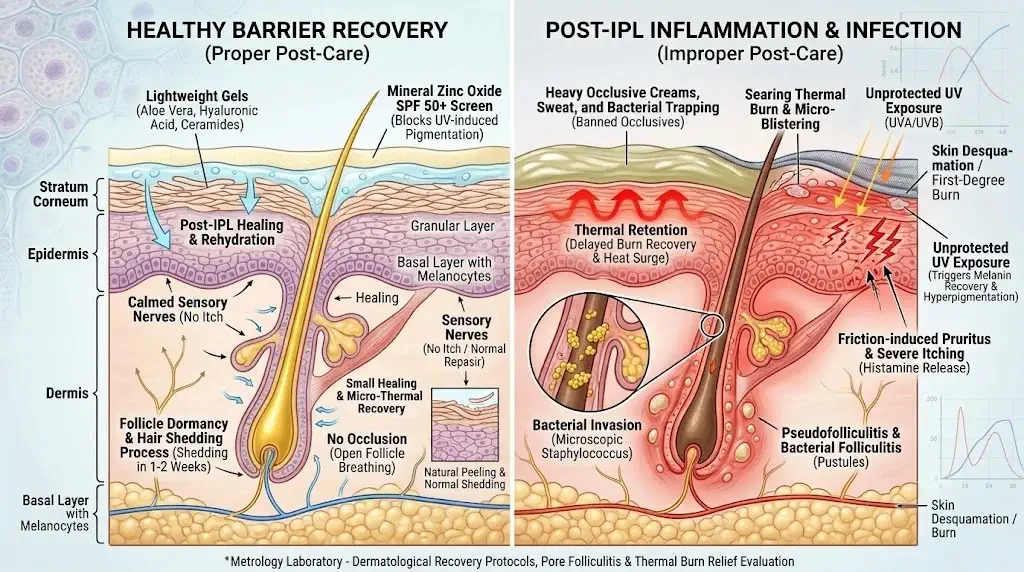
Compromised hair follicles readily host bacterial pathogens like Staphylococcus aureus if occluded immediately after treatment.
When you apply intense pulsed light to the skin, the micro-thermal impact briefly dilates and sensitizes the follicular ostium (the pore opening). If you apply thick, heavy, or oil-based body lotions right after a session, you trap heat and environmental bacteria inside these open pathways. This trap creates the perfect warm, moist environment for bacterial folliculitis—small, itchy white-headed pustules that erupt around the hair bases.
To prevent this, never touch freshly treated areas with unwashed hands, and avoid any activity that induces heavy sweating—such as strenuous workouts, spin classes, or hot yoga—for at least 24 to 48 hours. Enforcing a hygienic pause between sessions is especially critical when following an intensive, early-phase regimen like the one outlined in the Optimal At-Home IPL Schedule: Week-by-Week Protocol for Long-Term Loss.
Showering with lukewarm water and a gentle, fragrance-free cleanser within 12 hours helps rinse away sweat and prevents opportunistic bacteria from seeding open follicles.
Pseudofolliculitis vs Bacterial Folliculitis Management
Superficial thermal burns occur when IPL energy accumulates in thinned, exfoliated, or recently tanned skin.
A mild sunburn-like sensation, transient redness (erythema), and slight swelling (edema) are normal physiological responses to IPL that should resolve within a few hours. However, if you ignore safety windows and flash over skin that is recently sun-exposed, chemically thinned, or treated with active skincare, you can cause true thermal burns, painful blisters, and hyperpigmentation. Understanding whether Can You Use Active Skincare (Retinol, AHA/BHA, Vit C) While Doing IPL? is absolutely vital, as these potent products strip the skin’s natural photoprotective barriers.
If you do experience an accidental burn or see blistering, treat the area immediately. Apply a cold, damp compress (never apply ice directly, as extreme cold can cause further tissue damage) for 10-15 minutes to draw out the heat, then follow with a generous layer of pure aloe vera, panthenol (Pro-Vitamin B5), or a ceramide-rich barrier repair cream. Keep the area completely out of the sun, and never peel or pop any blisters that form.
Restoring your skin’s moisture barrier with natural, soothing lipids is essential to help the epidermis recover from optical overexposure.
Metrology Warning: Burn vs Normal Erythema
Normal post-IPL redness should completely fade within 24 hours. If redness persists beyond 48 hours, is accompanied by sharp stinging, peeling, or fluid-filled micro-blisters, you have sustained a first- or second-degree thermal burn. Treat this immediately by halting all IPL sessions on that zone and focusing entirely on barrier repair.
Sensory nerve endings release inflammatory histamines in response to rapid optical heat delivery.
A sudden surge of heat into the skin can irritate dermal nerve fibers, triggering a mild histamine release that causes itching or a prickly, uncomfortable sensation. This histamine response is particularly common in areas with dense, coarse hair, like the bikini line or shins, where the follicles absorb higher levels of energy. Scratching this itchy skin will break the compromised epidermal barrier, introducing bacteria and drastically increasing your risk of complications detailed in our guide to Avoiding Hyperpigmentation in the Bikini Area After IPL Treatment.
To quickly calm itching, apply a cold, damp compress, use a soothing lotion containing colloidal oatmeal, or try a 1% hydrocortisone cream. Wearing loose, soft natural fibers like cotton prevents fabric friction from making the itch worse. If the itching is severe and makes it hard to sleep, an over-the-counter antihistamine can be highly effective at blocking the inflammatory response from the inside out.
Subduing histamine flare-ups early with cooling and anti-inflammatory care prevents scratching and protects the skin from pigment changes or infections.
• Recovery Essentials (First 48 Hours)
- Frequent Hydration: Lightweight aloe vera, panthenol, and ceramides
- Physical UV Shielding: Apply Broad-Spectrum Mineral SPF 50+ (Zinc Oxide)
- Friction Defense: Loose, breathable cotton clothing and underwear
- Clean Habits: Luke-warm showers with mild, fragrance-free body wash
• Post-Care Traps (First 48 Hours)
- Direct Solar Exposure: No sunbathing or tanning bed use
- Heat & Moisture: No hot baths, jacuzzis, saunas, or sweaty workouts
- Comedogenic Lotions: Avoid baby oil, heavy occlusive butters, or vaseline
- Exfoliating & Peeling: Absolutely no chemical acids, retinol, or scrubbing
Contact cooling features lower epidermal surface temperatures to safely limit thermal transfer.
Advanced at-home IPL hardware is designed to significantly reduce the risk of post-care complications right at the source. Modern devices equipped with active contact cooling—such as sapphire or semiconductor chill plates—keep the outer skin cool before, during, and after each flash. This instant cooling restricts excessive heat to the targeted hair bulb, protecting the surface from the thermal trauma that typically causes burns and post-session itching.
Devices featuring automated, smart skin sensors offer another crucial layer of protection, especially when treating highly sensitive or easily irritated skin. By reading your skin tone 80 times per second and automatically modulating every flash’s energy, these devices prevent accidental burns and keep post-treatment irritation to a minimum. Combining smart sensor technology with a dedicated post-care routine ensures a safer, more comfortable path to permanent hair reduction.
Investing in advanced cooling or automated-sensor hardware provides an essential safety margin that helps protect your skin from irritation and damage.
Best For Intelligent Burn Prevention: Braun Pro 5
Equipped with high-speed SensoAdapt™ sensors that continuously scan your skin and automatically modulate energy levels, the Braun Silk-expert Pro 5 ensures that you always receive a safe, effective flash—virtually eliminating the risk of accidental burns.
Best For Post-Session Comfort: Ulike Air 10
With patented Sapphire Ice-Cooling technology that chills the glass window to under 15°C, Ulike actively calms heat and prevents itching on contact—making it a perfect match for anyone with sensitive, easily irritated skin.
Consumer FAQ: Post-IPL Skin Care
Why does my skin itch so much after an at-home IPL session?
Can I use standard body lotion immediately after a treatment?
How do I treat a mild burn or blister from IPL?
Is it safe to go swimming or use a hot tub after an IPL treatment?
When is it safe to exfoliate or shave again after a session?
