
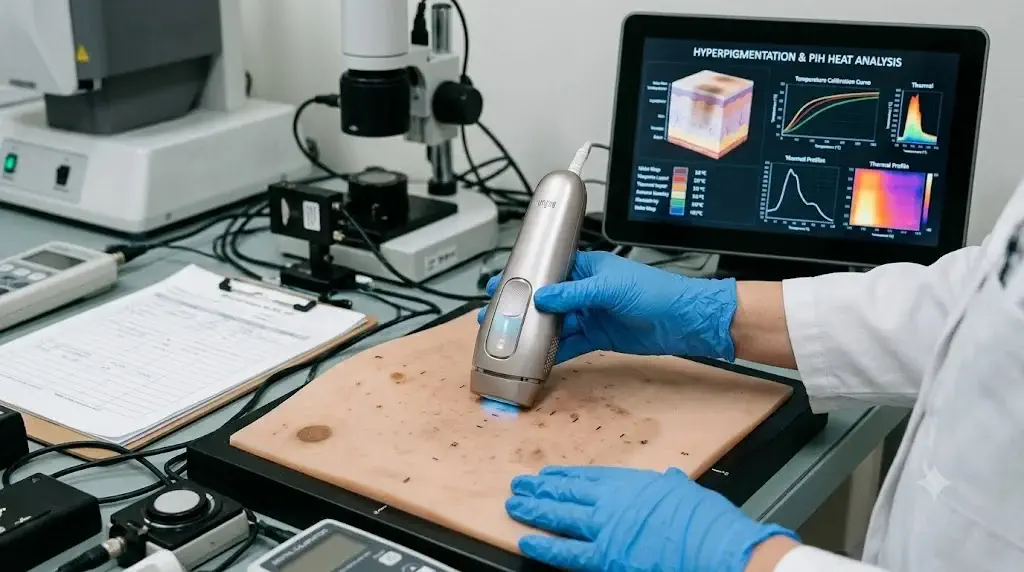
Post-IPL Recovery Protocols
Guides & Science
Avoiding Hyperpigmentation in the Bikini Area After IPL Treatment
By Nora Hayes, Lead Optical Metrology Auditor
Quick Reference Specification: Melanogenesis Control & Bikini Energy Limits
Quantitative laboratory thresholds and biological markers used to prevent thermal melanogenesis and Post-Inflammatory Hyperpigmentation (PIH) in highly friction-prone intimate areas.
| Bikini Sub-Zone | Recommended Max Fluence | Thermal Cooling Threshold | Melanogenesis Risk Level | Core Safety Intervention |
|---|---|---|---|---|
| Outer Bikini Line (Inguinal Crease) | 4.5 to 5.5 J/cm² | ≤ 18°C Contact Cooling | Low-Medium | Post-shave validation 12–24h prior; eliminate shaving micro-tears to limit inflammation. |
| Deep Bikini Line (Tanga Boundary) | 3.5 to 4.5 J/cm² | ≤ 15°C Sapphire Active | Medium | Moderate manual energy step-down (downward scaling by 20%); stretch skin taut. |
| Outer Labia Majora (Intimate Folds) | 2.5 to 3.0 J/cm² | ≤ 10°C Continuous Sapphire | High Risk (Hyperpigmented) | Strict energy capping; mandatory active ice cooling to prevent epidermal heat sink. |
| Upper Thigh Friction Gradients | 4.5 to 6.0 J/cm² | Optional / Recommend Ambient | Low (Tone Dependent) | Friction-reduction wear; apply barrier care; avoid synthetic tight fibers for 48h. |
Mitigating avoiding hyperpigmentation in the bikini area after IPL treatment is primarily an exercise in restricting inflammation and managing heat in highly friction-prone intimate zones. Unlike less reactive areas such as the forearms or calves, the inguinal crease and surrounding pelvic tissue contain high baseline concentrations of active melanocytes. This biological density makes these zones highly susceptible to Post-Inflammatory Hyperpigmentation (PIH) when exposed to unbuffered optical and thermal loads.
Preserving a uniform skin tone while achieving permanent hair reduction requires careful calibration of handpiece parameters and exact anatomical navigation. As detailed in our guides on the Best Laser & IPL Devices for Bikini & Brazilian Hair Removal and the boundary specifications outlined in Brazilian & Bikini Line At-Home IPL: Safe Boundaries & Pain Control, safe hair reduction in highly sensitive zones demands continuous epidermal protection and conservative energy thresholds.
Quick Answer: Prevention of Post-IPL Intimate PIH
Preventing hyperpigmentation after bikini line IPL requires limiting the optical energy to sub-critical levels (capping at 2.5–3.5 J/cm² on darker folds) while utilizing active sapphire contact cooling to ensure epidermal temperatures remain below 15°C (59°F). Post-inflammatory hyperpigmentation (PIH) is triggered by the natural release of inflammatory mediators when the skin is subjected to thermal stress or post-treatment friction. To halt this response, avoid overlapping flash pulses, drop the energy output on areas with darker shading, and strictly use barrier repair creams without fragrances. Additionally, protect the treated area from tight synthetic friction and UV exposure for at least 48 hours post-session.
Explore Bikini-Safe Devices →
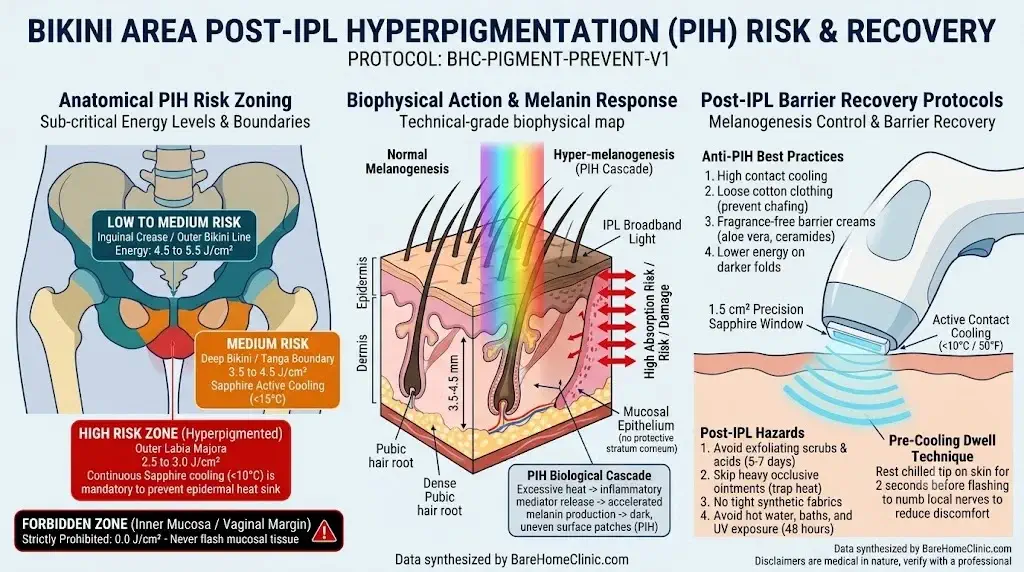
Post-Inflammatory Hyperpigmentation in pelvic tissue results from the thermal activation of epidermal melanocytes by inflammatory cascades.
Microscopic analysis of intimate skin reveals that the inguinal fold and inner upper thigh regions harbor some of the densest populations of active melanocytes on the body. When high-energy IPL pulses generate excessive heat within the dermis without sufficient cooling, they trigger a biological cascade of inflammatory mediators (such as prostaglandins and leukotrienes) in the surrounding tissue.
These inflammatory molecules act as chemical messengers that stimulate nearby melanocytes, accelerating the production and distribution of melanin (melanogenesis). This surplus pigment is then transferred into surrounding skin cells (keratinocytes), visible at the surface as dark, uneven patches. Because this response is driven by inflammatory pathways, any post-treatment friction or irritation directly worsens the risk of discolored marks.
Focusing on gentle heat management is essential, as even a slight reduction in thermal stress can stop PIH before pigment begins to accumulate.
Cascade of Intimate Post-IPL Hyperpigmentation
Immediate application of non-occlusive barrier repair topicals calms pelvic inflammation without trapping dermal heat.
IPL-treated skin experiences temporary barrier disruption, which can leave the epidermis sensitive, prone to moisture loss, and vulnerable to external irritants. Since unmitigated irritation in the bikini area frequently progresses to dark post-inflammatory marks, the use of calming recovery topicals is a vital preventative measure.
However, it is crucial to avoid heavy, occlusive ointments (like petroleum jelly or dense balms) immediately after a session, as they can trap thermal energy within the dermis and aggravate inflammation. For optimal post-IPL recovery, opt for lightweight, non-comedogenic formulas that support skin repair without trapping heat, as outlined in our clinical guide on Post-IPL Skin Care: Preventing Folliculitis, Burns, and Itching. Calming ingredients like pure aloe vera, panthenol, and ceramides help repair the stratum corneum while keeping melanocytes dormant.
Keeping the post-IPL barrier well-supported and free of harsh fragrances ensures the skin heals smoothly, preventing the inflammatory trigger that leads to hyperpigmentation.
Post-IPL Recovery Phase 1 (0 to 48 Hours)
Apply a generous layer of fragrance-free barrier cream containing ceramides or aloe vera twice daily. Avoid hot baths, high-intensity workouts, and friction from tight synthetic clothing for 48 hours to minimize skin irritation and heat entrapment.
Continuous mechanical friction from synthetic fabrics stimulates melanocyte activity in the inguinal folds.
The bikini area is subject to constant mechanical movement and contact friction from walking, sitting, and tight clothing. When skin is already compromised and thermally sensitized from an IPL session, this persistent rubbing can easily provoke a low-grade inflammatory response (chafing) that encourages the development of dark spots.
Synthetic materials like nylon, polyester, and elastane are particularly problematic because they trap heat and moisture, while coarse seams can cause micro-abrasions on tender skin. To safeguard the healing epidermis, switch to loose, breathable cotton undergarments and relaxed clothing for at least 48 to 72 hours after treatment. Cotton helps absorb moisture, reduces skin-on-skin friction, and allows the treated area to cool naturally.
Preventing physical friction in the groin area eliminates the inflammatory irritation that would otherwise prompt melanocytes to overproduce pigment.
• Anti-PIH Best Practices
- Sapphire cooling: Always use maximum contact cooling to protect skin from excess heat
- Loose clothing: Wear loose cotton underwear to prevent chafing and sweat buildup
- Barrier support: Apply lightweight, fragrance-free repair creams like aloe
- Conservative fluences: Lower energy by 1–2 levels on naturally darker skin folds
• Post-IPL Hazards
- No exfoliation: Avoid scrubs, loofahs, or acids for 5–7 days after treatments
- No heavy ointment: Skip petroleum jelly or thick balms that trap heat
- No tight synthetics: Avoid nylon, spandex, or tight jeans for 48 hours
- No hot water: Avoid hot showers, baths, and saunas for the first 24–48 hours
Potent topical acids and exfoliants aggravate thermally sensitized melanocytes in intimate zones.
Many users attempt to accelerate the fading of existing dark spots by applying brightening serums containing glycolic acid, salicylic acid, or retinoids directly after flashing. On recently pulsed intimate skin, however, these potent active chemicals strip away the lipid barrier, inducing chemical micro-burns and severe hyperpigmentation flares.
As detailed in our clinical guidance on Can You Use Active Skincare (Retinol, AHA/BHA, Vit C) While Doing IPL?, all exfoliating acids and cell-turnover accelerants must be paused for at least 48 to 72 hours before and after every IPL session. Restricting your regimen to pure hydration and lipid barrier restoration ensures that melanocytes remain dormant during active recovery phases.
Eliminating chemical exfoliants during the recovery window allows the skin to heal naturally without sparking post-inflammatory pigment accumulation.
Consumer FAQ: Hyperpigmentation & Post-IPL Recovery
How do I know if the dark spots in my bikini area are post-IPL hyperpigmentation (PIH)?
Is it safe to use skin-lightening creams like hydroquinone or niacinamide after bikini IPL?
Will hyperpigmentation after IPL fade on its own, and how long does it take?
Can I shave as usual if I have hyperpigmentation in my bikini line?
Why does the skin in my bikini area naturally look darker even before IPL?
Auditor Verdict: Protect Sensitive Intimate Skin with Active Cooling
Preventing post-inflammatory hyperpigmentation begins with choosing equipment designed for delicate tissue. Always utilize platforms featuring active sapphire contact cooling and conservative energy settings when treating the bikini line.
