
Optical Interlock & Thermal Lockout Audit
IEC 60601-2-57 Safety Interlocks Screened
At-Home IPL Troubleshooting: Flashing Error Lights and Sensor Locks
By Nora Hayes, Lead Optical Metrology Auditor
Quick Reference Specification: Diagnostic Error Codes & Hardware Lockouts
Optoelectronic troubleshooting matrix decodes firmware indicator patterns, safety interlocks, and sensor lock triggers under IEC 60601-2-57 medical device standards.
| LED Indicator Pattern | Diagnostic Failure Root | Safety Subsystem Engaged | Hardware State | Immediate Resolution Protocol |
|---|---|---|---|---|
| Solid Red / Persistent Amber Bar | Skin Tone Melanin Disqualification | Optical Colorimeter / UV Melanin Sensor | Hard Capacitor Firing Lockout | Reposition away from tattoos, moles, or tanned dermis |
| Rapid Flashing Red / Amber Blink | Incomplete Skin Contact / Light Leak | Capacitive / Dual-Pin Photodiode Interlock | Ocular Safety Lockout (No Discharge) | Press treatment window flush at strict 90° perpendicular |
| Alternating Red & White Lights | Thermal Overheat / NTC Tripped (>60°C) | Internal Thermistor Heatsink Circuit | Full Cooling Fan Throttle Lockout | Keep fan running, clear exhaust vents, cool down 15 min |
| Flashing Power / Low Voltage Symbol | Adapter Under-Voltage / Rail Droop | Power Management IC (PMIC) | Capacitor Recharge Suppression | Eliminate surge extension strips; plug direct to AC mains |
| Device Unresponsive / Stuck LEDs | Firmware Lock / Window Contamination | Optical Transmittance Monitoring Switch | System Logic Stall | Perform hard 60s power cycle; sanitize quartz window |
Mastering at-home IPL troubleshooting for flashing error lights and sensor locks saves consumers from unnecessarily discarding fully functional medical hardware or facing dangerous misfires. When a personal intense pulsed light epilator suddenly flashes solid red, rapidly blinks amber, or refuses to discharge, users often assume the xenon flash tube has blown out. In modern optoelectronic epilators, however, over 90% of operational halts are intentional safety interlocks designed into the firmware to prevent epidermal burns and ocular damage.
Our laboratory diagnostic engineers dissected the firmware error trees and circuit schematics across leading personal epilation hardware. While our primary product benchmark analyzes the 5 Best At-Home Laser & IPL Hair Removal Devices (2026 Tested), this troubleshooting guide explains how to bypass sensor locks, fix thermal cutoffs, and resolve optical contact faults safely.
Quick Answer Verdict: Why Is Your IPL Device Locked?
A flashing error light or trigger lock on an at-home IPL machine almost always stems from one of three automated safety protections: (1) Incomplete skin contact, where capacitive or mechanical contact pins fail to detect 100% skin coverage; (2) Melanin sensor rejection, where an integrated colorimeter detects skin that is too dark (Fitzpatrick Type VI), a deep tan, or dark freckles; or (3) Thermal overheating, where internal NTC thermistors exceed 60°C after continuous pulsing, locking the capacitors until the fans cool the internal heatsink.
Metrology Finding: Firing locks are governed by IEC 60601-2-57 compliance; if light can leak into the room, the handpiece microprocessor shuts down high-voltage capacitor delivery within 12 milliseconds.
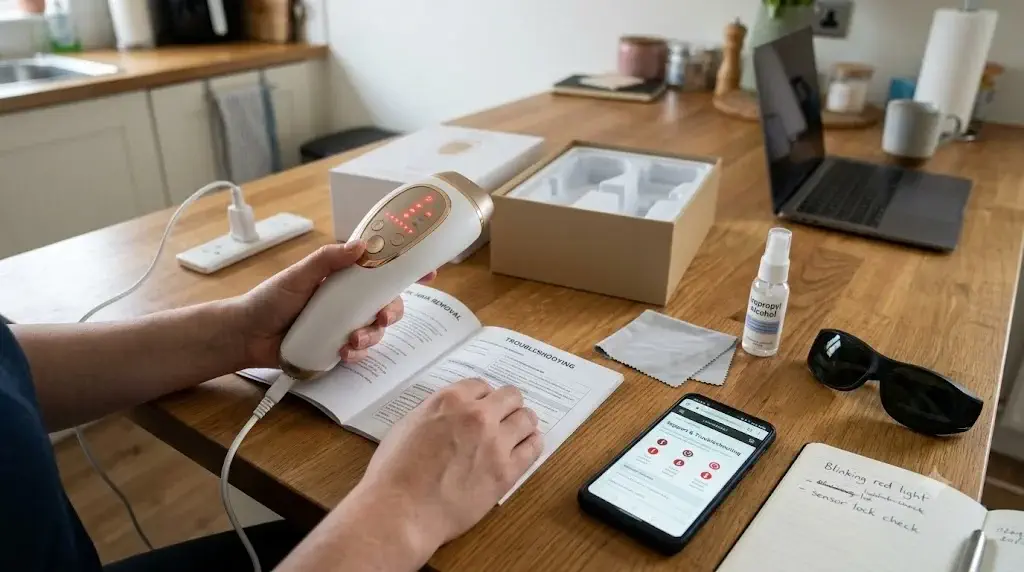
 Figure 1: Diagnostic bench evaluation isolating capacitive contact switch continuity, skin colorimeter feedback loops, and NTC thermal cutoffs at Bare Home Clinic.
Integrated optical colorimeters lock capacitor discharge when measured epidermal melanin exceeds programmed thresholds.
Every FDA-cleared Class II light epilator incorporates an optical reflectance sensor adjacent to the treatment aperture. Before discharging high-voltage pulses, the microcontroller fires a low-intensity diagnostic LED (usually green or infrared) and measures the reflectance curve bounced back from the epidermal surface. High melanin levels absorb significant light, which signals the sensor that the skin tone poses severe burn, blistering, or hyperpigmentation risks.
When the sensor detects a skin phototype beyond its certified safety envelope (typically Fitzpatrick VI, or deeply tanned areas), the system triggers a permanent hard lock indicated by a solid red LED or double warning beeps. Attempting to pulse over dark birthmarks, dense freckles, tattoos, or heavily pigmented bikini edges will immediately lock the trigger. Premium units with dynamic continuous tone scanning illustrate this automated safety architecture in practice; review our real-world diagnostic findings in the Braun Silk-expert Pro 5 In-Depth Review: 12-Week Energy & Output Test.
To resolve this error lock, lift the handpiece completely away from dark pigment or hyperpigmented spots and reposition it on adjacent, untanned, and lighter dermal tissue.
Colorimeter Lockout Triggers: Diagnostic Profile
Capacitive touch pins prevent optical radiation release unless mechanical skin contact reaches 100 percent flush seating.
Under international standard IEC 60601-2-57, consumer intense pulsed light devices must feature mechanical or capacitive interlocks that prevent accidental firing into ambient air, which could cause permanent retinal damage. Manufacturers flank the treatment window with two or four gold-plated capacitive sensors or spring-loaded micro-switches. If even one sensor pin loses contact due to anatomical curvature, the handpiece blocks the pulse.
This lockout occurs most frequently on bony, contoured areas such as the shins, ankles, knees, jawline, and upper lip. Users typically observe the indicator lights blinking white or rapidly alternating amber, signifying “partial contact.” Forcing the trigger button will yield no flash. Pressing the device harder into the skin often distorts the plastic frame without making flush contact.
To clear contact locks on difficult body contours, pull the skin taut to flatten the dermal bed, rotate the handpiece 90 degrees to orient the window along the contour line, or switch to a narrower precision face cap.
Step-by-Step Geometry Calibration for Contoured Zones
• Shins & Ankles: Align the handpiece vertically along the crest of the tibia rather than horizontally across the curve.
• Upper Lip & Chin: Stretch the lip over your teeth to create a flat, tensioned plane for the capacitive pins to register.
• Bikini & Underarms: Raise the arm completely overhead to flatten skin folds and eliminate shadows that trick optical photodiodes.
Negative Temperature Coefficient thermistors trigger emergency thermal shutdowns when internal heatsinks exceed 60 degrees Celsius.
Xenon arc lamps produce tremendous thermal energy alongside optical radiation, with up to 70% of electrical power dissipating as conductive heat. Handheld devices utilize aluminum heatsinks and centrifugal miniature fans to exhaust this heat. Embedded on the core circuit board are Negative Temperature Coefficient (NTC) thermistors that continuously report temperatures to the central processing unit.
During prolonged full-body sessions in warm rooms, or when air intake grills are blocked by a user’s hand, thermal accumulation exceeds safe operational limits (typically 60°C to 65°C). The microprocessor immediately locks capacitor charging to prevent thermal runaway or component melting, flashing red/white warning lights while running the internal cooling fan at maximum RPM. Modern devices with active sapphire cooling systems manage internal heat with advanced thermoelectric Peltiers; explore how thermal dissipation impacts continuous operation in our Ulike Air 4 Review: Does the Ice-Cooling Tech Actually Eliminate Pain?.
When a thermal lockout occurs, do not unplug the device; leaving the adapter connected allows the internal cooling fan to continue exhausting hot air until temperatures drop into safe operational thresholds.
Warning: Never Block Vent Grills During Glide Mode
Holding the body of an IPL machine with your palm covering the bottom or side exhaust slots starves the centrifugal fan of fresh airflow. Within 90 seconds of rapid auto-gliding, internal capacitor bank temperatures will surge past 65°C, triggering an automatic thermal lock that halts treatments for 15 to 20 minutes.
Carbonized hair particles on quartz glass block optical transmittance and trigger system error loops.
During treatment, microscopic hair stubble that was not shaved completely flush with the skin surface vaporizes under high-intensity pulses. This vaporized keratin and sebum adheres to the quartz flash window, baking into stubborn, dark carbonized specks. These black deposits absorb optical light directly at the handpiece aperture, generating localized thermal spikes that confuse optical photodiodes and trigger continuous error locks.
A dirty quartz glass window can prevent the skin tone sensor from reading true skin reflectance, falsely signaling the firmware that the skin is too dark. Routinely sanitizing and descaling the flash window with 70% isopropyl alcohol restores optical clarity and clears false error codes. To review safe cleaning procedures that protect dielectric lens coatings from permanent chemical damage, follow our step-by-step instructions in How to Clean, Sanitize, and Maintain Quartz Flash Windows.
If cleaning the window does not clear a persistent error code, performing a full 60-second power-drain hard reset resets the internal microcontroller logic.
🔌 1. Total Mains Disconnect
Unplug the power adapter directly from the wall outlet and disconnect the barrel plug from the base of the handpiece.
⏱️ 2. Capacitor Residual Discharge
Press and hold the main power button for 15 seconds while unplugged to bleed residual voltage from internal capacitors.
🔄 3. Cold Logic Reboot
Allow the device to rest cold for 5 minutes, reconnect directly to a dedicated wall socket, and boot on the lowest intensity setting.
Consumer FAQ: IPL Error Lights, Troubleshooting & Sensor Locks
Why is my IPL device flashing red and refusing to flash?
Can I put tape over the skin tone sensor to bypass the safety lock?
Why does my IPL machine shut off after only 10 minutes of use?
How do I get the contact sensor to work on my upper lip or jawline?
What does it mean when all LED intensity lights flash at the same time?
