
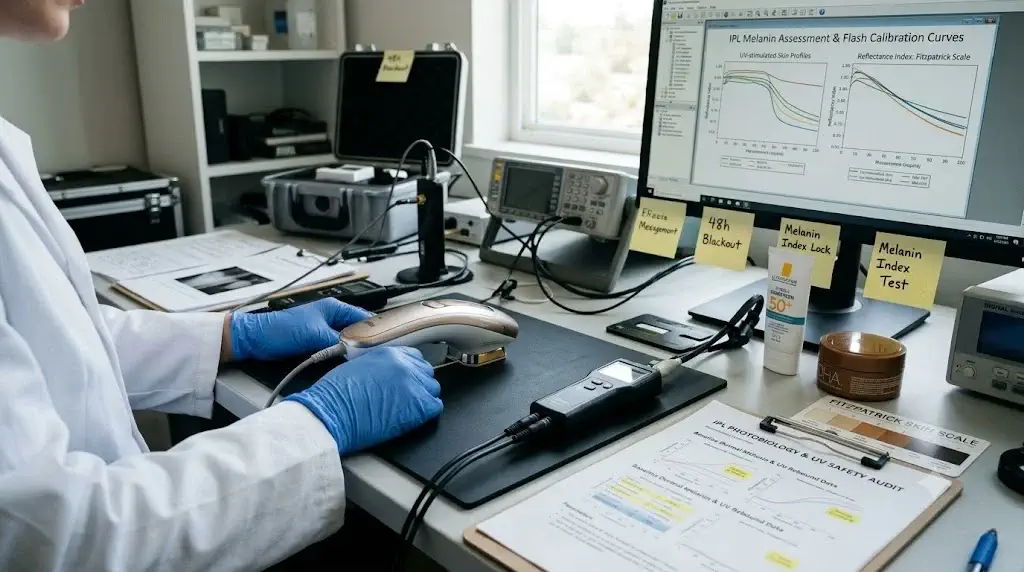
UV Melanin Activation vs Optical Fluence
Clinical Safety Protocol
Sun Exposure, Tanning, and At-Home IPL: Pre- and Post-Care Rules
By Nora Hayes, Lead Optical Metrology Auditor
Quick Reference Specification: Sun Exposure & IPL Safety Windows
Empirical dermatological guidelines establish mandatory timeframes, epidermal melanin risk thresholds, and photoprotection standards before and after IPL sessions.
| Safety Parameter | Pre-Treatment Requirement | Post-Treatment Requirement | Clinical Metrology Rationale |
|---|---|---|---|
| Natural Sunlight Exposure | Strict 48-Hour Blackout (2 Weeks for Burns) | Mandatory 48-Hour Zero UV Exposure | Prevents Epidermal Blistering & Hyper-Pigmentation |
| Artificial Spray / Self-Tanning | Complete Chemical Removal (7–10 Days Prior) | Wait 48 Hours Minimum Until Skin Calms | DHA Dyes Trick Optical Sensors Into Burning Dermis |
| Tanning Beds (UVA Lamps) | Contraindicated (4 Weeks Absolute Cessation) | Contraindicated Throughout IPL Treatment Cycle | Over-Stimulated Melanocytes Cause Permanent Scars |
| Photoprotection Standard | Broad-Spectrum SPF 30+ Daily | Broad-Spectrum SPF 50+ Physical Zinc Oxide | Blocks UVA/UVB While Basement Membrane Recovers |
| Sensor Reaction on Tanned Skin | Automated Intensity Drop or Hardware Lockout | N/A (Treatment Already Delivered) | Safety Sensor Detects High Surface Melanin Index |
Mastering sun exposure, tanning, and at-home IPL pre- and post-care rules is the single most critical factor in preventing clinical burns, paradoxical hyperpigmentation, and hardware-induced epidermal damage. Intense Pulsed Light devices operate via selective photothermolysis, directing polychromatic broad-spectrum optical energy (510–1200nm) into melanin chromophores located within the follicle root.
When ultraviolet (UV) radiation or self-tanning compounds darken the outer layer of the skin, that superficial epidermal melanin competes with the hair root for optical photons. Instead of passing harmlessly through pale epidermis to shatter the bulb, the flash energy converts into intense heat on the skin’s surface. Understanding your basal baseline on The Fitzpatrick Skin Scale Guide for At-Home Hair Removal is the prerequisite to avoiding thermal shock when managing sun exposure.
Quick Answer Protocol: The Solar Golden Rules of At-Home IPL
Never pulse recently tanned, sunburned, or DHA-tinted skin. You must enforce an absolute 48-hour pre-treatment sun blackout (extending to 2 full weeks if actively tanning or sunbathing) and an uncompromising 48-hour post-treatment UV blackout. If your skin exhibits any redness, peeling, heat, or artificial bronze coloration, pause your schedule. Following treatment, apply broad-spectrum mineral zinc oxide SPF 50+ daily to safeguard sensitised melanocytes from triggering post-inflammatory hyperpigmentation (PIH).

Ultraviolet radiation stimulates basal melanocytes to flood the epidermis with light-absorbing eumelanin.
When skin absorbs ultraviolet B (UVB) and ultraviolet A (UVA) rays, skin cells launch a protective defense mechanism by producing excess melanin pigment. In untreated, untanned skin, this melanin is concentrated primarily within the hair cortex, allowing IPL photons to pass harmlessly through the clear epidermis. However, once a tan develops, the epidermal layer becomes saturated with competitive pigment.
If you fire an intense pulsed light device over tanned tissue, the superficial melanin intercepts the optical burst at the skin surface. This instantaneous energy absorption spikes dermal temperatures beyond 70°C, causing superficial partial-thickness burns, blisters, and potential permanent scarring. For individuals who naturally carry higher baseline melanin levels, selecting verified hardware from the 5 Best At-Home Hair Removal Devices for Dark Skin (Fitzpatrick IV-VI) is essential to prevent epidermal overheating.
Strict pre-treatment protocols require a minimum 48-hour window free of direct sun exposure, expanding to 14 full days if you have acquired an active, visible outdoor suntan.
Pre-Session Solar Assessment Checklist
Dihydroxyacetone self-tanners deposit synthetic chromophores that trick optical safety sensors into dangerous misfires.
Sunless tanning lotions, mousses, and professional spray tans rely on Dihydroxyacetone (DHA). This sugar molecule chemically reacts with dead keratinocytes in the stratum corneum via the Maillard reaction, staining the skin surface a golden-brown hue. While DHA does not stimulate natural melanin production, its artificial pigment absorbs identical light wavelengths (500–700nm) as natural eumelanin.
When an IPL flash strikes DHA-stained skin, the chemical pigment absorbs radiant energy almost instantly. Because this artificial dye resides entirely on the uppermost epidermal surface, it instantly vaporizes, scorching the skin barrier while blocking light from ever reaching the root below. Furthermore, combining chemical fake tanners with exfoliating acids or retinoids introduces extreme contact dermatitis, as detailed in our guide on whether You Can Use Active Skincare (Retinol, AHA/BHA, Vit C) While Doing IPL.
You must thoroughly exfoliate and completely strip away all self-tanning residues for at least 7 to 10 days before performing an at-home IPL treatment.
Clinical Warning: The Invisible DHA Layer
Even when a spray tan appears faded to the naked eye, microscopic DHA dye particles remain lodged inside epidermal micro-creases. Always perform a patch test on a clean, exfoliated patch of skin if you have used fake tanner within the last two weeks.
Post-treatment epidermal tissue remains hypersensitive to photo-induced inflammation for forty-eight hours.
Discharging pulsed light down the hair follicle creates transient thermal injury within the adjacent perisinusoidal tissue. Immediately following an IPL pass, the epidermis exhibits microscopic thermal edema, temporary lipid barrier disruption, and heighted vascular perfusion (erythema). Exposing this acutely sensitized tissue to solar radiation triggers immediate melanocyte hyperactivity, directly causing Post-Inflammatory Hyperpigmentation (PIH) or stubborn dark spots.
The golden window of post-IPL care requires complete avoidance of active sunlight, heated saunas, and hot baths for 48 hours. When stepping outdoors, you must apply a physical, mineral-based sunscreen containing at least 15% Zinc Oxide or Titanium Dioxide. For structured post-session routines that prevent follicle irritation, read our comprehensive recovery protocol on Post-IPL Skin Care: Preventing Folliculitis, Burns, and Itching.
Physical mineral sunscreens reflect UV photons without chemically interacting with open, heat-treated hair follicles, making them far superior to chemical filters post-session.
✓ Mandatory Post-IPL Protections
- Sunscreen Choice: Broad-Spectrum Mineral SPF 50+ (Zinc Oxide)
- Clothing Defense: UPF 50+ Long Sleeves & Protective Trousers
- Topical Soothing: 100% Pure Aloe Vera Gel & Panthenol (B5)
- Hydration Priority: Ceramide Barrier Creams applied twice daily
✗ Prohibited Post-IPL Triggers
- Direct Sunbathing: Zero pool/beach tanning for 48–72 hours
- Chemical Filters: Avoid Avobenzone/Oxybenzone on day of treatment
- Thermal Exertion: No hot tubs, intense cardio, or steam rooms
- Aggressive Scrubs: No loofahs or chemical peels for 5 days
Smart skin tone colorimeters automatically prevent flash discharge on newly tanned skin.
Human visual judgment is inherently unreliable when assessing subtle UV tanning changes. Premium IPL hardware incorporates real-time reflectance colorimeters that actively read dermal melanin density prior to every single flash discharge. If you have spent unexpected time in the afternoon sun and developed a faint tan, intelligent sensors instantly dial down the optical energy to a safe fluence or lock out the flash completely.
Budget devices that utilize manual setting toggles cannot protect you from your own miscalculations; they will happily discharge maximum 5.0 J/cm² energy into a fresh tan if you instruct them to. Pairing smart automatic skin sensors with advanced contact sapphire cooling provides the ultimate hardware safety barrier against thermal burns during sunny months.
Investing in smart-sensor or contact-chilled hardware gives you an automated safety margin that protects against accidental solar overexposure.
🛡️ Best For Automated Tone Safety: Braun Pro 5
Equipped with SensoAdapt™ sensors scanning skin tone 80 times per second, the Braun Silk-expert Pro 5 automatically dials down output or refuses to fire if sun exposure has darkened your skin, preventing accidental surface burns.
❄️ Best For Post-Sun Soothing Comfort: Ulike Air 3 / Air 10
Featuring patented Ice-Touch sapphire planar cooling that chills epidermis to under 15°C, Ulike dampens thermal stinging and protects sensitive, warmth-prone skin during the summer epilation season.
Consumer FAQ: Sun Exposure, Tanning, and At-Home IPL
Can I use at-home IPL during the summer months?
How long must I wait to do IPL after getting a sunburn?
Why did my IPL device leave white spots or dark patches after sun exposure?
Is fake tan completely safe if I only use self-tanning drops?
What type of sunscreen is best immediately after an IPL treatment?
